Immigration in France: role and timelines of administrations in 2026

Six administrations may be involved in an international employee’s journey: consulates, prefectures, OFII, CPAM, CREIC or SANDIA. Each has its own rules, timelines, and practices. And they don’t always communicate with one another.
This article is built on our field experience: more than 2,000 cases handled every year, across dozens of prefectures, for profiles of all nationalities.
Key takeaways
- 6 administrations may be involved in the immigration journey of a foreign employee in France
- Prefecture timelines vary from 1 month to 10 months depending on the territory, for the same type of application
- Government directive of 05/04/2026 imposes a reduction in deadlines
- The Civic examination is mandatory since 1 January 2026, including for employees already present in France
- CREIC (centre of inactive European nationals CMUISTS) and SANDIA (National Administrative Service ofregistration of insured persons) are two administrations that most companies discover too late, often when a blockage occurs
- Anticipation is not optional. A poorly prepared file means a recruitment delayed by several months.
Consulates and Embassies: the first administration in French immigration
Embassy or Consulate: what’s the difference for your immigration procedures?
The embassy officially represents France in a foreign country. It manages diplomatic relations, negotiates agreements, and provides information about the country’s situation. In terms of visas, it may be the competent authority if no consulate is present in the country.
The consulate, on the other hand, is the local office. It issues visas, passports, and civil status documents. In the vast majority of cases, it is the consulate that your employees will need to contact.
A concrete example that often comes as a surprise: for a national living in Spain or Portugal, it is the Consulate General of France in Madrid that is competent, not the consulate of the employee’s country of residence. This consulate only opens its counters in the morning for submissions.

💡Practical advice: Always check the territorial competence of the consulate before starting the process. An application submitted to the wrong consulate is not processed: it is simply returned, with the resulting delay.
VLS-TS and Long-Stay Visas: what the Consulate issues in French immigration procedure
The consulate issues two key types of documents for entry into France: the standard long-stay visa and the long-stay visa equivalent to a residence permit (VLS-TS).
The VLS-TS is particularly advantageous for companies: it allows the employee to enter France and start work immediately, without having to visit a prefecture in the first few weeks. The average processing time is 2 to 3 weeks for a VLS-TS.
Since Hermelin Report (Visas mission, April 2023), several consulates have extended the issuance of VLS-TS valid for one year directly to Talent Profiles – European Blue Card on submission of a permanent contract. This is the case in Bangalore, Hyderabad, Moscow, Rio de Janeiro, Houston, Tirana, and Muscat. A genuine step forward for companies recruiting from these countries.
Taking up the post is only possible upon receipt of the visa and after the employee’s physical arrival in France. Any earlier start exposes the employer to the risk of illegal employment.
Prefectures: the central administration in French immigration
Who does what between the prefecture, PFMOE, and registered office?
Three entities are involved at the prefecture level, and confusion between them is a recurring source of error.
The PFMOE (Foreign Employee Mobility and Employment Management Platform) handles work authorisations. Applications are submitted exclusively online, based on the actual place of employment or the registered office. Current processing times are approximately 3 months.
The prefecture of the employee’s place of residence is responsible for issuing the residence permit. It processes the file, schedules appointments, and sends out notifications.
The authentication declaration, less commonly known, is made to the prefecture of the employer’s registered office. It serves to verify the authenticity of residence documents.
ANEF digitalisation: a simplification that creates new complexities for your immigration procedures
Since 2018, the government has been rolling out ANEF (Digital Administration for Foreign Nationals in France) to digitise procedures. The stated aim: to reduce visits to prefectures and limit physical appointments to fingerprinting and permit collection.
In practice, the picture is more nuanced. The online platform has indeed lightened certain steps. But it has also created new difficulties: less visibility on file processing, submission windows that open unpredictably (requiring close monitoring), and practices that vary from one prefecture to another despite common directives.
Digitalisation does not apply to all statuses. Some profiles still need to submit by post or request an appointment by email. And even when the procedure is digitised, a physical visit remains compulsory for certain statuses.
“Digitalisation is supposed to simplify procedures, but in reality it sometimes creates new difficulties, which makes support indispensable.”
Caroline Treuillard, Managing Director of France Immigration
Prefectures timelines in 2026: from 2 months to 10 months
Processing times for a residence permit do not depend solely on the type of case. They depend above all on the prefecture.
Our experts experience these figures on a daily basis but know how to navigate them. Our established relationships with French administrations and our knowledge of local practices make it possible to achieve almost 100% case approval rates.
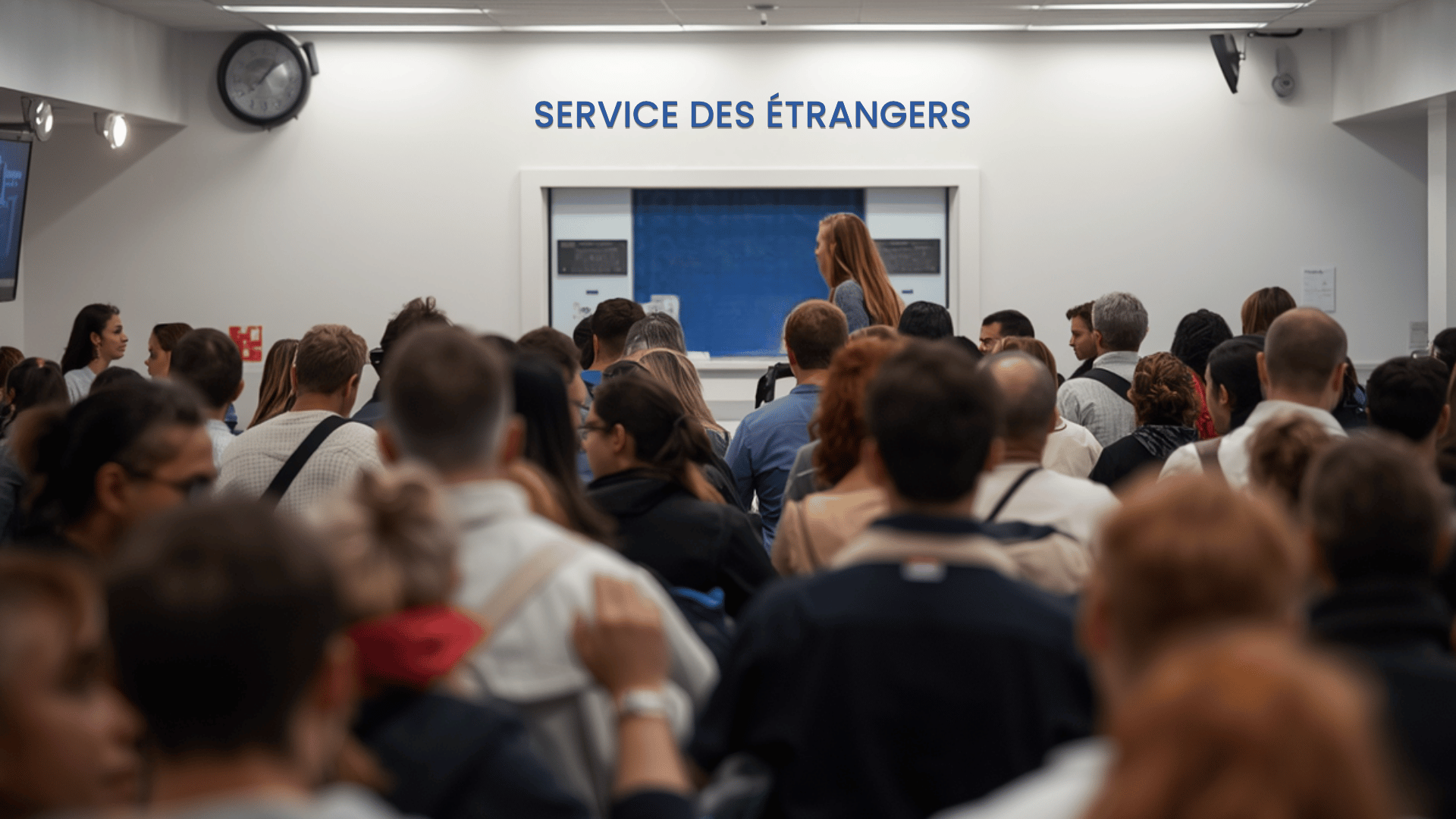
Some on-the-ground data from our real-time monitoring:
| Prefecture | Type of case | Observed timeline (2026) |
|---|---|---|
| Seine-Saint-Denis (93 | First permit / renewal | ~10 months |
| Gironde (33) | First permit | ~10 months |
| Nanterre (92) | Digitalised cases (DN) | ~4 months |
| Paris | Student status change to Talent | 1 to 2 months |
| Rhone (69) | First permit (Dec. 2025) | ~260 days |
At national level, approximately 930,000 cases are currently pending. The pressure on services is real.
Some prefectures are adapting. The Marseille prefecture is conducting a major recruitment drive. Essonne (91) has opened counters on Saturdays for permit collection. Nanterre occasionally offers the same.
💡Practical advice: Never plan a start date without factoring in a safety margin calibrated on the employee’s prefecture of residence, not the national average. 10 months in Seine-Saint-Denis means 10 months of potential delay for a recruitment.
Government directive of 05/04/2026: what changes for your immigration cases
On 5 April 2026, the government published a directive on reducing processing times for residence permit applications and combating the loss of rights. This is a strong political signal, but implementation will be gradual.
In practical terms, this directive asks prefectures to prioritise certain profiles, to better document their timelines, and to reinforce their staffing where bottlenecks are most severe. It is too early to measure the on-the-ground impact, but this is a development to monitor closely.
OFII: role and obligations in the French immigration journey
The French Office for Immigration and Integration intervenes after arrival in France, but sometimes also abroad. Its role: to ensure the employee meets the medical conditions for entry into the territory and commits to an integration pathway.
Medical examination and CIR: the obligations not to overlook
Every first-time arrival is called by OFII for a medical examination. This is a compulsory step. It conditions the validation of the VLS-TS and, in some cases, the continuation of the administrative process.
Signing the Republican Integration Contract (CIR) is also compulsory for the vast majority of foreigners settling in France on a long-term basis. The CIR includes civic training and, if necessary, French language courses.
💡Practical advice: The exemption certificate stating the linguistic level has no legal value. Do not rely on it to avoid appearing before OFII.
Change from student to employee status: the exception to know in 2026
An employee who transitions from student to employed status in France is not required to sign a new CIR. This is a useful exception to be aware of.
However, please note: these employees may be called by OFII during the first year of their employee card to obtain a linguistic exemption certificate. Failing to attend this summons may block renewal, particularly for obtaining a Multi-Year Residence Permit.
💡Our recommendation: attend systematically, even when the exemption appears to be guaranteed.
Compulsory civic exam since 01/01/2026: what changes for your employees
Since 1 January 2026, the civic examination has been compulsory for all CIR signatories. This includes employees already present in France who are applying for a permit renewal.
This is a recent change, and many companies have not yet incorporated it into their processes. An employee who does not sit this examination may find themselves in a rights gap at the time of renewal.
Social protection and immigration in France: CPAM, CREIC and Sandia
This is often where cases stall without anyone understanding why. These three administrations are less visible than the prefecture, but their role is just as fundamental to the integration of a foreign employee.
CPAM: gateway social security for foreign employees in France
The Primary Health Insurance Fund is the first point of entry into the French social protection system. For a foreign employee who has never been registered in France, the employer must request their registration with the CPAM of their place of residence.
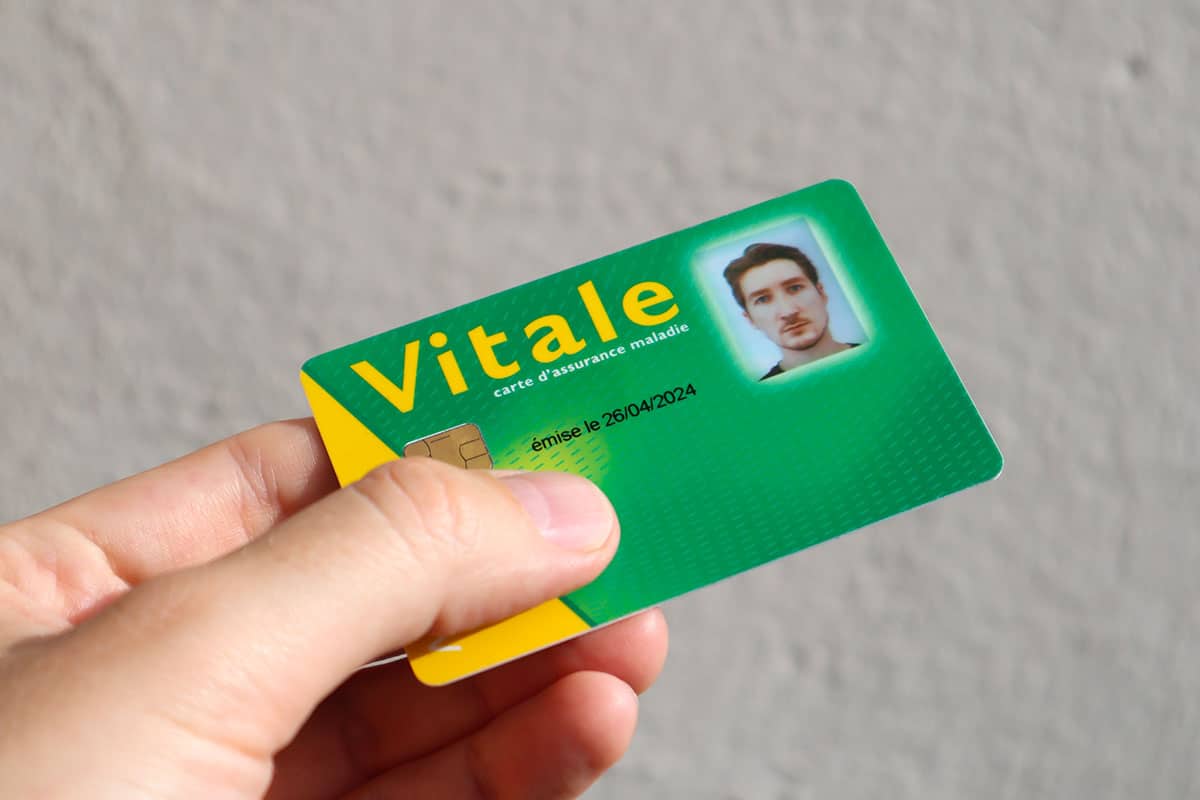
The logic is territorial, except for Talent and ICT (Intra-Company Transfer) profiles, who fall under specific CPAM offices.
The employer plays the role of “system translator” here. Foreign employees are unfamiliar with the French health insurance system. Explaining the procedures to them and supporting them through their first applications is a part of the onboarding process that is often underestimated.
💡Practical advice: Initiate CPAM registration as soon as the visa is approved, not after the employee’s arrival. Timelines can exceed 2 months. An employee without a social security number cannot be reimbursed for their medical expenses.
CREIC: the little-known national centre for inactive European nationals
The CREIC (National Centre for Inactive European Nationals with CMU) is a little-known service, even among HR professionals. Yet it is the body that processes all CPAM affiliation applications for inactive European nationals living in France.
It is a central administration with no physical reception. Cases are processed nationally, with potentially long timelines and considerable administrative complexity.
Refusals are not uncommon. An incomplete or poorly prepared file goes back to square one. Anticipating and securing the file upstream is the only way to avoid blockages.
SANDIA: the invisible administration for persons born abroad
SANDIA (National Administrative Service for the Registration of Insured Persons) is the administration responsible for social security registration of persons born abroad.
With no accessible public-facing contact point, SANDIA is a black box for most employers. Timelines are long. The quality of documents provided directly determines the outcome. Administrative inconsistencies are frequent: errors in first names, transliterations of civil status documents, unrecognised documents.
💡Practical advice: For all employees born abroad, initiate SANDIA registration with certified copies of civil status documents, translated by a sworn translator. A single error in the documents delays the entire process.
Immigration administrations in France: what they all have in common
Territorial competences that do not communicate with each other
This is the first lesson from our field experience. The PFMOE, the prefecture, OFII, and CPAM are all involved in the same case, but they do not share information. Each administration has its own logic, its own forms, its own timelines.
The result: a file can be approved at one stage and blocked at the next for a reason that the first administration cannot explain to you.
Heterogeneous practices from one prefecture to another
Directives are national. Practices are local. Two prefectures may interpret the same rule differently. Two officers in the same prefecture may request different supporting documents for the same type of case.
This is frustrating. It is also a documented reality that we observe across thousands of cases. The internet is full of incorrect information about these practices, sometimes deliberately misleading. Be wary of specialist forums and Facebook groups.
The real risks for your recruitments and international mobility
A blocked case is not just an administrative problem. It means an employee who cannot take up their position. A mission that goes off the rails. A talent who, in some cases, chooses a different destination.
The risks are also on the employer’s side: an employee in an irregular situation, even involuntarily, exposes the company to financial and criminal sanctions. Co-responsibility is real.
Conclusion
The administrative journey of a foreign employee in France involves six administrations, timelines that range from one to tenfold depending on the territory, and practices that resist any generalisation. This is not a matter of bad luck or ill will. It is the structural reality of a system built up in successive layers, without central coordination.
What makes the difference for companies is anticipation. Knowing the actual timelines for each prefecture, preparing files in advance, identifying blockage points before they arise: this is what makes it possible to secure recruitments and international mobility.
At France Immigration, we handle more than 2,000 cases per year, across all prefectures in France. If you would like to review your procedures or anticipate the arrival of an employee, our experts are available for a consultation.all the prefectures of France. If you want to take stock of your steps or anticipate theArrival ofan employee, our experts are available for a diagnosis.
{ “@context”: “https://schema.org”, “@graph”: [ { “@type”: “Organization”, “@id”: “https://www.france-immigration.com/#organization”, “name”: “France Immigration”, “alternateName”: “Mobility Compliance Group”, “url”: “https://www.france-immigration.com/”, “founder”: { “@id”: “https://www.france-immigration.com/#jerome-renon” }, “knowsAbout”: [ “Immigration in France”, “Residence permit”, “International mobility”, “Secondment of foreign employees”, “Expatriate social protection”, “Immigration compliance”, “Work permit” ], “logo”: { “@type”: “ImageObject”, “url”: “” }, “sameAs”: [ “https://www.linkedin.com/company/france-immigration/” ] }, { “@type”: “WebSite”, “@id”: “https://www.france-immigration.com/#website”, “url”: “https://www.france-immigration.com/”, “name”: “France Immigration”, “publisher”: { “@id”: “https://www.france-immigration.com/#organization” } }, { “@type”: “Person”, “@id”: “https://www.france-immigration.com/#jerome-renon”, “name”: “Jérôme Renon”, “jobTitle”: “Founder & CEO”, “worksFor”: { “@id”: “https://www.france-immigration.com/#organization” }, “url”: “https://www.france-immigration.com/” }, { “@type”: “Person”, “@id”: “https://www.france-immigration.com/#caroline-treuillard”, “name”: “Caroline Treuillard”, “jobTitle”: “International Mobility Expert”, “worksFor”: { “@id”: “https://www.france-immigration.com/#organization” }, “url”: “https://www.france-immigration.com/”, “sameAs”: [ “https://www.linkedin.com/in/caroline-treuillard/” ], “description”: “Expert in international mobility and professional immigration at France Immigration (Mobility Compliance Group), specialised in French immigration procedures, residence permits and compliance for businesses.” }, { “@type”: “WebPage”, “@id”: “https://www.france-immigration.com/expert-articles/immigration-in-france-delays-administrations-2026/#webpage”, “url”: “https://www.france-immigration.com/expert-articles/immigration-in-france-delays-administrations-2026/”, “name”: “Immigration in France: role and timelines of administrations in 2026”, “isPartOf”: { “@id”: “https://www.france-immigration.com/#website” }, “mainEntity”: { “@id”: “https://www.france-immigration.com/expert-articles/immigration-in-france-delays-administrations-2026/#article” }, “primaryImageOfPage”: { “@type”: “ImageObject”, “url”: “https://www.france-immigration.com/wp-content/uploads/2026/04/Immigration-en-France-role-et-delais-des-administrations-en-2026-880×500-c-center.webp” } }, { “@type”: “BlogPosting”, “@id”: “https://www.france-immigration.com/expert-articles/immigration-in-france-delays-administrations-2026/#article”, “headline”: “Immigration in France: role and timelines of administrations in 2026”, “description”: “Consulates, prefectures, OFII, CPAM, CREIC, SANDIA: master the 6 immigration administrations in France and their 2026 timelines.”, “author”: { “@id”: “https://www.france-immigration.com/#caroline-treuillard” }, “publisher”: { “@id”: “https://www.france-immigration.com/#organization” }, “datePublished”: “2026-04-17T09:00:00+02:00”, “dateModified”: “2026-04-17T09:00:00+02:00”, “inLanguage”: “en”, “wordCount”: 2300, “about”: [ { “@type”: “Thing”, “name”: “Immigration in France” }, { “@type”: “Thing”, “name”: “Residence permit” }, { “@type”: “Thing”, “name”: “French immigration administrations” }, { “@type”: “Thing”, “name”: “Prefecture timelines 2026” }, { “@type”: “Thing”, “name”: “OFII” }, { “@type”: “Thing”, “name”: “CPAM foreign employee” } ], “image”: “https://www.france-immigration.com/wp-content/uploads/2026/04/Immigration-en-France-role-et-delais-des-administrations-en-2026-880×500-c-center.webp”, “mainEntityOfPage”: { “@id”: “https://www.france-immigration.com/expert-articles/immigration-in-france-delays-administrations-2026/#webpage” }, “hasPart”: [ { “@id”: “https://www.france-immigration.com/expert-articles/immigration-in-france-delays-administrations-2026/#howto” }, { “@id”: “https://www.france-immigration.com/expert-articles/immigration-in-france-delays-administrations-2026/#faq” } ] }, { “@type”: “HowTo”, “@id”: “https://www.france-immigration.com/expert-articles/immigration-in-france-delays-administrations-2026/#howto”, “name”: “How to anticipate the immigration procedures of your foreign employees in France”, “description”: “The 4 key steps to securing the arrival of a foreign employee in France by mastering the 6 administrations involved.”, “step”: [ { “@type”: “HowToStep”, “position”: 1, “name”: “Identify the territorially competent consulate”, “itemListElement”: [{ “@type”: “HowToDirection”, “text”: “Verify the territorial competence of the consulate based on the employee’s usual place of residence — not their place of birth or workplace abroad.” }] }, { “@type”: “HowToStep”, “position”: 2, “name”: “Submit the work permit (PFMOE) simultaneously and anticipate the residence permit”, “itemListElement”: [{ “@type”: “HowToDirection”, “text”: “Handle PFMOE and prefecture of residence procedures in parallel, not in sequence: the two administrations are independent and do not coordinate with each other.” }] }, { “@type”: “HowToStep”, “position”: 3, “name”: “Factor in a safety margin based on the employee’s prefecture of residence”, “itemListElement”: [{ “@type”: “HowToDirection”, “text”: “Timelines range from 1 to 10 months depending on the prefecture (Seine-Saint-Denis, Val-de-Marne, Essonne: up to 10 months). Never plan a start date based on the national average.” }] }, { “@type”: “HowToStep”, “position”: 4, “name”: “Initiate CPAM and SANDIA registration as soon as the visa is approved”, “itemListElement”: [{ “@type”: “HowToDirection”, “text”: “Do not wait for the employee’s physical arrival in France: CPAM timelines exceed 2 months, and SANDIA extends this further for persons born abroad.” }] } ] }, { “@type”: “FAQPage”, “@id”: “https://www.france-immigration.com/expert-articles/immigration-in-france-delays-administrations-2026/#faq”, “mainEntity”: [ {FAQ: frequently asked questions about immigration administrations in France
It is the prefecture of the foreign employee’s place of residence that issues the residence permit. The work permit, however, is issued by the PFMOE, a separate regional platform. The two procedures are linked but processed independently.
They range from 1 to 10 months depending on the prefecture and type of permit. In Seine-Saint-Denis, Val-de-Marne, Essonne, and Gironde, timelines reach 10 months. In Paris, for a change of status from student to Talent, allow approximately 2 months. There is no reliable national timeline: the only useful figure is that of the relevant prefecture.
No. This is one of the most frequent frustrations raised by HR teams. Once the application is submitted on the PFMOE platform, it disappears from the dashboard. It only becomes visible again if the processing officer sends a request for additional documents. No acknowledgement of receipt, no real-time status. The only way to obtain information is to contact the PFMOE directly — with response times that vary depending on the regional platform.
OFII organises the compulsory medical examination and the signing of the Republican Integration Contract. It intervenes after entry into the territory. For profiles transitioning from student to employed status, the CIR is not compulsory, but an OFII summons remains possible during the first year.
Not for the CIR: Talent permit holders are exempt from signing the Republican Integration Contract. The same applies to ICT holders. However, since 1 January 2026, the civic examination has become compulsory for all first-time arrivals, including Talent profiles. Some prefectures apply these exemptions inconsistently. If your employee is summoned, the recommendation is to attend: refusing a summons may block permit renewal.
Between 4 and 8 weeks on average, depending on the local CPAM and the completeness of the file. For persons born abroad, the file goes through SANDIA, which extends the timelines. For inactive European nationals, it is the CREIC that processes the case: allow more time. An employee without a social security number cannot be reimbursed for their medical expenses. Initiate the process as soon as the visa is approved, not upon arrival in France.
Initiate the registration request as soon as the visa is approved, not upon arrival. For inactive European nationals, the file goes through CREIC: allow for longer timelines and a higher level of documentary requirements. For persons born abroad, it is SANDIA that processes the case: prepare impeccable civil status documents.
First, identify the precise reason for the blockage. An incomplete file, a missing document, and an unavailable appointment each call for a different response. If the deadline exceeds the legal processing time without a decision, a pre-litigation appeal and then a contentious appeal are possible. In the most urgent cases, an interim application before the administrative tribunal may unblock the situation.


The mobility sector is constantly evolving: subscribe to our newsletter and stay up to date!
- Mandatory formalities to complete
- The administrations responsible for the procedures
- Required documents
- Immigration statuses