Carte Vitale for a Foreign Worker: What It Is and How to Apply
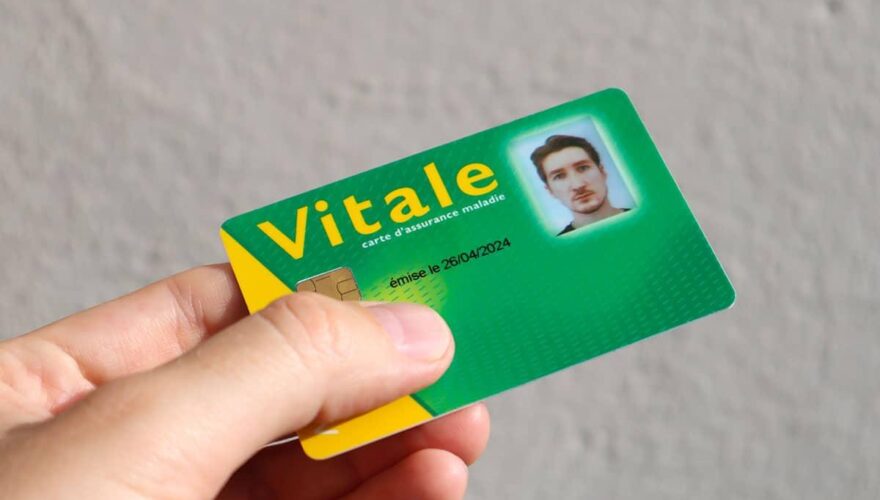
In France, any foreign worker can apply for a Carte Vitale to be reimbursed for medical expenses. The process starts with compulsory CPAM affiliation for foreign employees at the CPAM for employees covered by the general health insurance scheme. So far, straightforward.
What often surprises HR teams: the timescales depend not on the employee’s nationality, but on their situation. A worker being registered for the first time (first-time registration) does not face the same wait as one who has already contributed and simply needs to reactivate their rights. Without planning from the point of hire, the employee may be left without any operational cover for several weeks.
This guide sets out the procedures, required documents, and key points to watch, depending on the foreign worker’s profile.
- CPAM affiliation first: the Carte Vitale can only be ordered once registered with the French social security system. This is the first step to take as soon as employment begins
- Timescales vary depending on the procedure: reactivation of rights versus first-time registration
- Rights certificate and NIA: they replace the Carte Vitale whilst it is being processed and allow access to healthcare without upfront payment
- International students: they can obtain a Carte Vitale from the age of 16, with slightly different procedures depending on their affiliation scheme
- Dependants: minor children are included on the employee’s card; spouses are no longer covered as dependants and, if they have no activity of their own, must follow a separate process
What Is the Carte Vitale for?
The Carte Vitale is a personal, free, and secure chip card. It is used to prove health insurance entitlements to healthcare professionals. During a consultation, it enables prompt processing — provided the patient holds a supplementary health insurance policy and télétransmission is activated.
With the Carte Vitale:
- There is no need to send paper healthcare forms to the French social security system
- Reimbursements are automatically credited to your bank account within an average of two weeks
- You benefit from direct coverage in the event of hospitalisation in an approved establishment
It contains administrative information:
- Your identity and, where applicable, that of your dependants (minor children)
- Your French social security number
- The health insurance scheme to which you belong
- The primary health insurance fund (CPAM) to which you are attached — for employees covered by the general scheme (which applies to private-sector employees; other funds also exist)
Please note: the Carte Vitale contains no medical data (medical history, treatments, conditions) and is not a means of payment.

Who can obtain a Carte Vitale?
Carte Vitale for foreigners: eligibility is not based on nationality
Anyone affiliated with the French social security system is entitled to obtain a Carte Vitale. Whether European or non-European, a foreign worker obtains the Carte Vitale under the same conditions as a French employee, provided they are registered with the French social security system.
Nationality does not affect the procedure or the timescales: only the registration situation, first-time registration or reactivation of rights, makes the difference, as set out below.
It is accessible from the age of 16.
This includes:
- Employees (including foreign workers on permanent, fixed-term, or assignment contracts)
- Self-employed individuals
- Foreign students on apprenticeship or paid internship contracts
- Persons residing on a stable basis in France (under the Universal Health Protection scheme — PUMA
The case of foreign students:
A foreign student with no salaried activity must register directly with the CPAM — except where sector-specific exceptions apply (agriculture → MSA, etc.) — of their place of residence. Once their definitive social security number has been issued, they can apply for a Carte Vitale and take out a supplementary health insurance policy.
Steps to Obtain a Carte Vitale
When a foreign worker arrives in France to take up paid employment, they must apply for affiliation with the Assurance Maladie through the relevant CPAM before they can order their Carte Vitale. This application is generally made through the CPAM of the place of residence.
The documents required vary depending on your profile. France Immigration supports you in preparing your application to avoid back-and-forth with the CPAM and speed up the opening of your rights.
Step 1 — Register with the French social security system
The foreign worker compiles an affiliation application with the CPAM of their place of residence.
The documents required vary depending on your profile. France Immigration supports you in preparing your application to avoid back-and-forth with the CPAM and speed up the opening of your rights.
Step 2 — Obtain a social security number
Once the application is accepted, a provisional number is issued, which is then replaced by a definitive number. This number is required to create an Ameli account and track your application.
Step 3 — Order the Carte Vitale
- Online at ameli.fr via your personal account (if already available)
- By post, using the form received
A passport photograph and a copy of an identity document must be provided. The card is sent by post within 3 to 4 weeks.
Since 1 June 2026, for the vast majority of countries, foreign birth certificates must be accompanied by an Apostille or Legalisation and must be dated less than one year old. Translations, where required, must be carried out in France by a sworn translator approved by a court of appeal. A translation carried out abroad will not be accepted. Certain nationalities remain exempt from this requirement, in particular several European countries that have specific agreements with France.
What Are the Timescales Depending on the Employee’s Situation?
The duration varies depending on whether or not the employee has previously been registered in France. It is this criterion — not nationality — that determines the timeline.
| Situation | Provisional number (NIA) | Physical Carte Vitale |
|---|---|---|
| First-time registration (never previously affiliated) | 6 to 8 weeks | 4 to 5 weeks (after receipt of definitive NIR) |
| Reactivation of rights (previously registered) | No NIA required | 4 to 5 weeks (after reactivation of NIR) |
| Student via etudiant-etranger.ameli.fr | Variable | 2 to 5 weeks (after receipt of NIR) |
⚠️ These timescales apply from the submission of a complete application.
Rights Certificate, Validity Period, and Renewal
Before receiving their Carte Vitale, the foreign worker can request a rights certificate from the CPAM. This document proves their affiliation and provides access to healthcare whilst waiting for the physical card.
The NIA (Waiting Identification Number) is issued by the CPAM whilst the application is being processed. It enables the employee to be reimbursed for healthcare expenses retrospectively from their start date, without waiting for the physical card. However, the NIA does not allow the creation of an Ameli account or the receipt of the Carte Vitale. It is the NIR (the definitive number, certified by the SANDIA) that gives access to these.
The Carte Vitale has no expiry date. It remains valid for as long as health insurance entitlements are open. It is advisable to update it regularly using the terminals available in pharmacies or at the CPAM.
A renewal can be requested in the event of:
- A change in personal or professional circumstances
- Loss or theft
- A damaged or defective card
All the social protection procedures for foreign workers in France: CPAM affiliation, dependants’ rights, timescales, and employer obligations. White paper available only in French.
The digital Carte Vitale
Since 2019, France has been progressively rolling out the digital Carte Vitale. Accessible via smartphone, it provides access to reimbursements, entitlements, and health information through the Ameli account. Dependants (children) are also linked to it.
Easy to use and highly secure, it offers policyholders a modern and efficient alternative whilst providing the same entitlements as the physical version.
The app is straightforward to use: once activated, simply unlock it with a PIN code and present your smartphone to the healthcare professional.
They can read the card:
- Either by scanning the QR code displayed in the app
- Or using a compatible NFC reader
Please note: not all healthcare professionals are yet equipped to accept the digital card. It is therefore currently recommended to also carry the physical card to appointments.

Linking with complementary health insurance
The Carte Vitale can be linked to supplementary health insurance (mutuelle) via the NOEMI télétransmission system. This synchronisation simplifies administrative procedures:
- Automatic transfer of reimbursement statements
- Faster reimbursement of the supplementary portion
- Fewer administrative steps for the foreign worker
Practical tip: check regularly that the supplementary insurance is correctly linked to the Carte Vitale, especially following a change of insurer.oviders.
- File the DPAE (pre-employment declaration) before the start date
- Compile the CPAM affiliation application as soon as the contract is signed (Cerfa form S1104)
- Obtain a copy of the residence permit authorising employment
- For non-EU employees: sworn translation, Apostille or Legalisation of the birth certificate, dated less than one year old (unless exempt)
- Inform the employee of the NIA as soon as the CPAM confirmation is received
- Link the company supplementary insurance to the Carte Vitale via NOEMI
- Follow up with the CPAM if no response is received within 8 weeks
- If the employee leaves: close their entitlements with the CPAM
Conclusion
Applying for a Carte Vitale for a foreign worker is an essential step to accessing healthcare in France, obtaining a rights certificate, and benefiting from health insurance entitlements. With a social security number, a complete set of supporting documents, and the form submitted to the primary health insurance fund, the process is now simpler and faster.
For every foreign worker, the Carte Vitale represents a genuine health passport in France, guaranteeing continuous cover for them and their children.
The Carte Vitale application for a foreign worker follows a clear process, but timescales vary depending on employment circumstances. Anticipating before hire, compiling a complete application from the outset, and informing the employee about the NIA: these are the three habits that save time.
Our experts manage the entire application: from gathering the documents through to receipt of the Carte Vitale. Over 630 applications processed per year.
Frequently Asked Questions About the Carte Vitale for a Foreign Employee
Allow 4 to 5 weeks from the submission of a complete application to the CPAM, regardless of nationality. This timescale runs from the reactivation or receipt of the definitive social security number.
The NIA is a provisional number issued whilst the application is being processed. It provides access to healthcare and reimbursements without waiting. The definitive number is issued once the civil status details have been verified by the CPAM. This definitive number is the one that appears on the Carte Vitale.
The Carte Vitale is free of charge, including for foreign employees. Neither CPAM registration nor the card itself involves any fee.
Yes. A foreign student on an apprenticeship or paid internship falls under the general scheme and registers with the CPAM in the same way as any employee.
A student with no salaried activity registers directly at etudiant-etranger.ameli.fr. The Carte Vitale is accessible from the age of 16 in both cases.
The employee’s Carte Vitale can include data for their minor children. A spouse with no activity of their own must be registered separately on the Ameli account. Any person aged 16 or over may obtain their own card.
Yes. The rights certificate issued by the CPAM is sufficient to prove affiliation to healthcare professionals. The NIA fulfils this role during the registration phase.
Compiling the CPAM application remains the employee’s responsibility, but the employer can track progress.
Entitlement closure procedures must be carried out with the CPAM to avoid unnecessary contributions. See also: Managing an employee’s departure from France.


The mobility sector is constantly evolving: subscribe to our newsletter and stay up to date!
- Mandatory formalities to complete
- The administrations responsible for the procedures
- Required documents
- Immigration statuses