EU: EES causing delays of up to 5 hours at Schengen borders
Since 10 April 2026, the Entry/Exit System (EES) has been fully operational across 29 Schengen countries. The system biometrically records each entry and exit of third-country nationals on short stays.
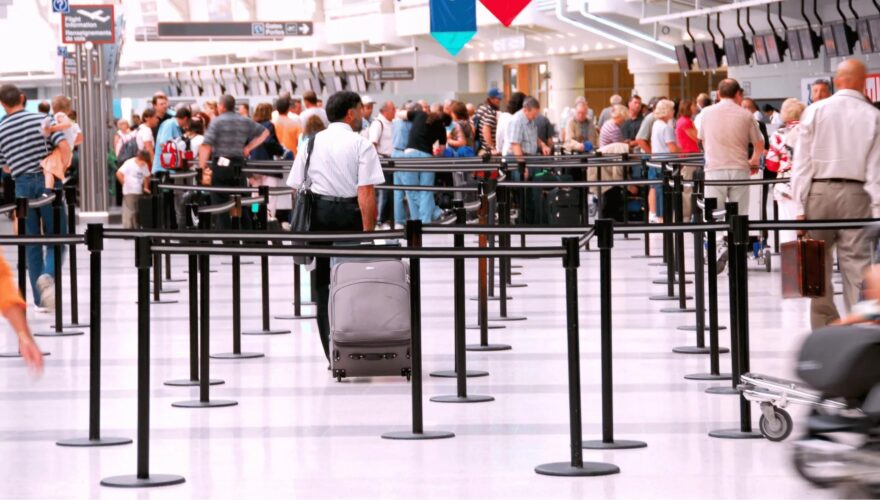
In the height of summer, the impact is already visible: according to Touteleurope.eu, queues are reaching up to five hours at peak times in several major European hubs. Your non-European employees travelling on business are directly affected.
Entry/Exit System: waiting times doubling at major hubs
At Paris-CDG, Frankfurt, Amsterdam and Munich, maximum waiting times have doubled compared to summer 2025. This deterioration is driven by the full biometric registration required on the first entry into the system: facial photograph and fingerprints add several minutes per traveller at each checkpoint.
✅ Who is affected: third-country nationals on a short stay (90 days in any 180-day period) who do not hold a residence permit or long-stay visa in a Schengen country. In practice: British, American, Australian, Brazilian or Indian employees on a short-term business trip in Europe.
✅ The first crossing takes longer: full biometric registration (facial photograph and fingerprints) is mandatory on the very first entry into the EES. Subsequent crossings are faster once the profile has been created. This particularly affects new international recruits and employees who have not yet transited through a Schengen checkpoint under the EES.
✅ Temporary flexibility — but uncertain: until 6 September 2026, certain border posts may suspend fingerprint collection when congested. Nine member states, including France, requested an extension of this measure in early July. The European Commission has not yet ruled. The launch of the ETIAS system has also been postponed to 2027, confirming the ongoing operational difficulties the EES continues to generate.
Until that date, certain border posts may suspend fingerprint collection in cases of congestion. Nine countries, including France, have requested an extension — though the Commission’s final decision remains uncertain at this stage.
For HR and mobility teams, the impact is concrete: every business trip to a busy Schengen airport or port may now take several hours longer than planned. Our guide to EES and the new border controls covers the traveller profiles and applicable exemptions in detail. This constraint comes on top of the EES already replacing passport stamps across the Schengen area — a change to integrate into your stay-tracking processes.
What employers need to anticipate for their teams
- Allow for a wider connection margin for any trip to a busy Schengen airport or port. For an employee making their first crossing under the EES, three hours before boarding is the minimum recommended, particularly at major European hubs during the summer season.
- Brief employees before departure, especially for first crossings: full biometric registration is mandatory and cannot be avoided. Proactive communication from the HR team prevents unpleasant surprises during international business trips.
- Monitor developments around biometric flexibility after 6 September 2026: the European Commission’s decision will change border control conditions in the coming weeks. Plan ahead now for missions scheduled in autumn.
Every professional trip in the Schengen area is now affected by EES. Our experts manage 650+ immigration procedures per year.
Frequently Asked Questions
The Entry/Exit System biometrically records the entries and exits of third-country nationals on short stays in the Schengen area. It has been fully operational since 10 April 2026 across 29 countries.
Full biometric registration on first crossing, combined with the summer surge in travellers, is saturating checkpoints at Paris-CDG, Frankfurt, Amsterdam and Munich. Waiting times have doubled compared to summer 2025.
Nine member states, including France, requested this extension in early July 2026. The European Commission has not yet ruled. The outcome will be decisive for border control conditions in autumn 2026.


The mobility sector is constantly evolving: subscribe to our newsletter and stay up to date!
- Mandatory formalities to complete
- The administrations responsible for the procedures
- Required documents
- Immigration statuses