US Work Visas: Which One Should You Choose? (E, L, H-1B, J-1, O-1)

Which US work visa should you choose? It depends first on the mobility scenario: transferring an employee already in post, hiring a specialist, arranging a training assignment, or expanding a commercial activity, and choosing the right visa category from the outset is essential.
Our international immigration experts support companies every year across five visa categories, L-1, H-1B, O-1, J-1 and E, each suited to a specific mobility scenario, with very different eligibility criteria, timelines and constraints.
For employers, identifying the right procedure from the outset is essential. Getting it wrong can cost weeks, sometimes months, before the situation can be corrected.
This article covers only work visas for medium and long-term assignments. For a short-term trip that does not require a work visa, see our articles on the B-1 visa and on ESTA. For a lasting move to the United States, see our articles on the Green Card and the Gold Card.
-
The L-1 visa suits an employee already in post for at least a year, transferred to a US affiliate, with no annual quota.
-
The H-1B visa is subject to an annual quota of 65,000 visas, plus 20,000 places reserved for graduates of US universities, allocated by lottery.
-
Since 2026, a $100,000 surcharge has applied to certain initial H-1B petitions, a change few guides mention yet.
-
The O-1 visa carries no quota, but requires demonstrating a nationally or internationally recognised level of expertise.
-
Nationals of treaty countries such as France have been eligible for the E visa since 1960, with validity recently extended to 48 months.
-
The right visa depends on the mobility scenario, not just the job title: transfer, recruitment, expertise, training or investment.
Which visa should you choose for your mobility scenario?
| Scenario | Visa | Key constraint |
|---|---|---|
| Transferring an employee already in post | L-1 | One year’s seniority |
| Hiring a qualified specialist | H-1B | Quota and lottery |
| Recognised exceptional expertise | O-1 | High burden of proof |
| Training or cultural exchange | J-1 | Return sometimes required |
| Investment or commercial activity | E-1 / E-2 | Eligibility by nationality |
Transferring an employee already in post: the L-1 visa
The L visa facilitates intra-company transfers between a foreign company and its US entity.
There are two variants:
- the L-1A, reserved for executives and managers
- the L-1B, for employees with specialised knowledge unique to the company
What are the eligibility criteria for the L-1 visa?
The company must first demonstrate a qualifying relationship between the two entities:
- parent company;
- subsidiary;
- branch;
- affiliate.
The transferred employee must then meet several conditions:
- have worked full-time for the group outside the United States for at least one year within the past three years;
- hold a managerial, executive, or specialised-knowledge role;
- take up a comparable role at a US subsidiary, branch or affiliate.
Unlike the H-1B, the L-1 carries no annual quota, making it the fastest route for an intra-company transfer that has already been planned. The initial visa is granted for one year if the US subsidiary has existed for less than a year, then for three years on renewal, up to a maximum of seven years for an L-1A and five years for an L-1B, as set out on the USCIS L-1A page and the L-1B page.
The spouse of an L-1 employee has benefited from automatic work authorisation since November 2021 (no separate application is required after entry into the United States), a rare advantage among US work visas, confirmed by the USCIS Policy Manual on work authorisation for E and L spouses.
Hiring a specialist: the H-1B visa, subject to quota and lottery
The H-1B is aimed at US employers looking to hire a foreign professional for a role classed as a specialty occupation, requiring at least a bachelor’s degree or equivalent.
What are the eligibility criteria for the H-1B visa?
The candidate must:
- hold a university degree equivalent to at least a US bachelor’s degree;
- possess the specific skills required for the role;
- work in what is classed as a “specialty occupation”.
The employer, for its part, must:
- meet the wage levels set by US authorities (the prevailing wage for the role in its region);
- file a Labor Condition Application with the Department of Labor beforehand;
- demonstrate that working conditions comply with US regulations.
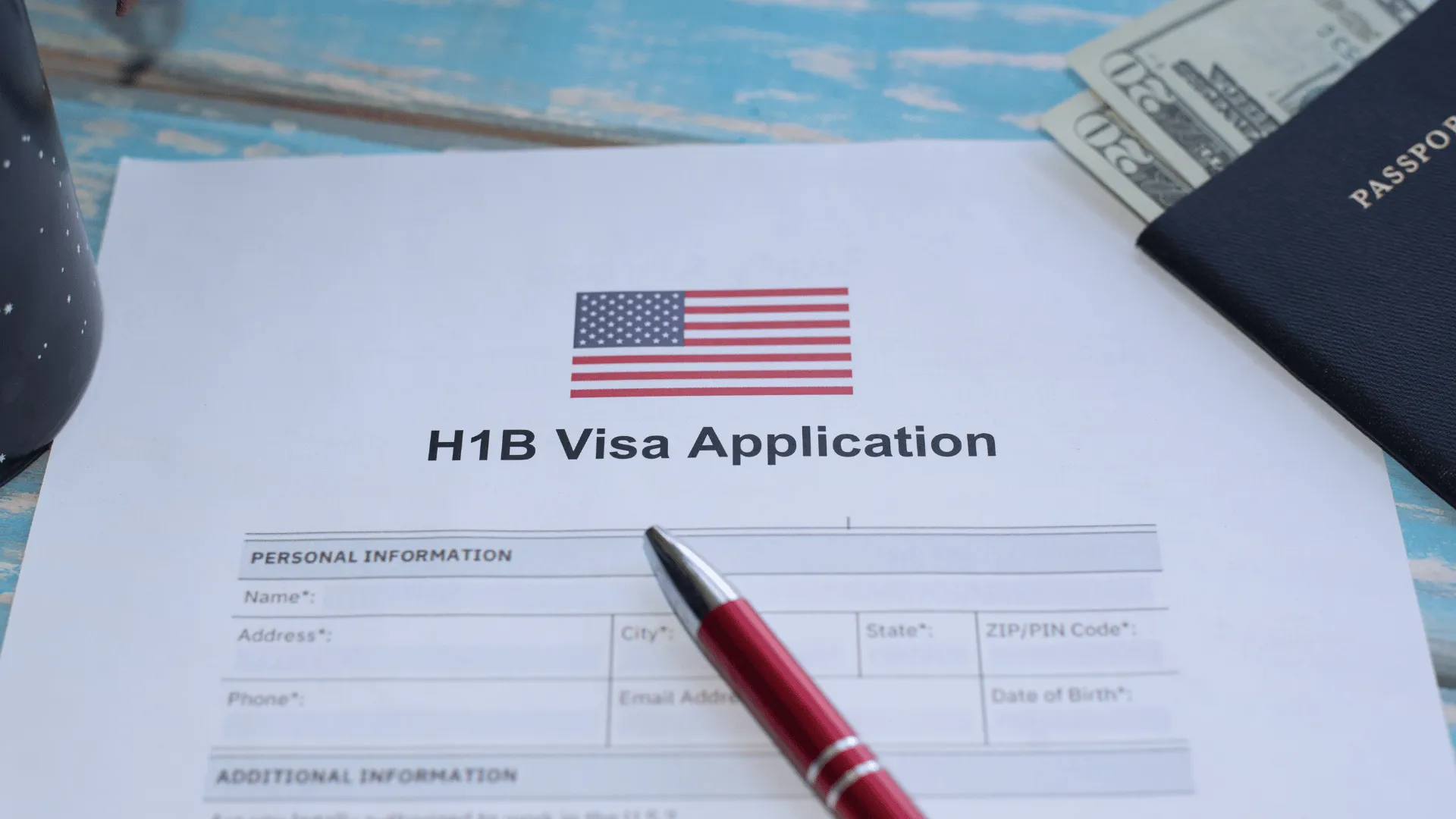
The quota is set at 65,000 visas a year, with 20,000 additional places reserved for graduates of advanced degrees from US universities, as confirmed on the USCIS H-1B cap season page.
Demand far outstrips supply every year, which is why a lottery is used: an employee not selected cannot try again until the following fiscal year, unless another visa category such as the L-1 or O-1 is considered in the meantime.
Despite this constraint, the H-1B remains one of the most sought-after visas for recruiting qualified international talent in the United States.
Since 2026, a $100,000 surcharge has applied to certain initial H-1B petitions, on top of the usual filing fees. Most guides available online do not yet mention this change.
Attracting exceptional talent: the O-1 visa
The O-1 targets employees whose skills are considered exceptional in their field, in the sciences, business, education, or sport.
What are the eligibility criteria for the O-1 visa?
The candidate must demonstrate significant recognition at national or international level, providing several forms of evidence, such as:
- awards or distinctions;
- publications;
- recognised speaking engagements;
- significant responsibilities;
- a high salary;
- major contributions to their field.

No annual quota applies to this visa, making it an option worth considering when the employee does not fit the standard H-1B profile, or when the lottery timeline is not suitable.
The stronger the competition in the field concerned, the higher the burden of proof required.
Arranging a training or exchange assignment: the J-1 visa
The J-1 covers cultural and professional exchange programmes: internships, training, research or teaching assignments. It is not a standard employment visa: the candidate must first be accepted by a sponsor organisation approved by the US Department of State, which issues the DS-2019 form.
What are the eligibility criteria for the J-1 visa?
The candidate must:
- take part in a programme officially sponsored by an organisation approved by US authorities;
- have a consistent academic or professional background;
- demonstrate the educational or professional value of the programme;
- comply with the duration requirements set by US regulations.
For example:
- a “J-1 intern” applicant must generally be a student or recent graduate
- a “J-1 trainee” applicant must already have professional experience in their field.
⚠️ Some J-1 holders must return to their home country for two years before being eligible for another US immigration status, notably where the programme was government-funded or addresses an identified skills shortage. This point must be checked before starting the process: it can jeopardise a later mobility project to the United States.
Developing a business or investing: the E visa
The E visa follows a different logic to the four visas above: it is not about transferring or recruiting an employee, but allows foreign entrepreneurs and companies to develop their activities on US soil.
There are two categories:
- E-1 visa: developing a trading activity for international trade
- E-2 visa: making a substantial investment, for investors
What are the eligibility criteria for the E visa?
For the investor (E-2), the requirements are to:
- hold the nationality of a country that has signed a treaty with the United States, such as France;
- make a substantial investment in a US company;
- demonstrate that the invested funds come from a lawful source;
- develop a real, operating business in the United States;
- own at least 50% of the US company or exercise operational control over it.
For an employee sent under this visa, the requirements are generally to:
- share the nationality of the investing company;
- hold a strategic, managerial role or one requiring essential skills.
France has been eligible under this treaty since 1960, covering mainland France and the departments of Martinique, Guadeloupe, French Guiana and Réunion, as confirmed on the US Department of State’s page on E visas.
Since November 2023, the validity of the E visa issued to French nationals has increased to 48 months, up from 25 months previously.
This visa is mainly relevant to executives, managers or employees holding an essential role within a company that meets the treaty’s criteria, rather than to employees transferred as part of a standard intra-company move.
What employers need to anticipate before starting the process
Beyond choosing the visa, an employer sending an employee to the United States must decide between a secondment (keeping the employee on their home-country payroll and social security) and a local contract, a decision that determines whether home-country social security contributions continue during the assignment. In France’s case, this is known as “détachement”: the employee remains affiliated to the French social security system while working abroad, under conditions set by bilateral or EU social security agreements. This decision must be made before the visa application is filed, not after.
Coordination between the employer’s HR team and the US sponsor also affects real-world timelines: an L-1 or H-1B case poorly prepared on the employer’s side delays the US entity’s filing of Form I-129, often without the employee being informed in time.
Since July 2026, USCIS has tightened its signature requirements for immigration forms, an additional point of vigilance to build into case preparation.
Another point to anticipate: the consular interview must take place in the employee’s country of nationality, which can complicate matters for an expatriate employee whose nationality differs from their current country of residence.
-
Check the employee’s seniority for L-1 eligibility
-
Plan for the lottery if the H-1B is the only option
-
Decide between secondment and local contract before filing
-
Check E-1/E-2 eligibility based on the nationality involved
-
Coordinate the employer’s HR timeline with the US sponsor
Conclusion
Choosing a US work visa is not just a matter of job title. It depends on the mobility scenario, the employee’s seniority, and sometimes a lottery entirely outside the employer’s control.
Backing the wrong category from the start costs time that few US projects can afford to lose.
The wrong visa choice delays an entire project. Our experts handle more than 650 international immigration cases every year.
Frequently Asked Questions
The L-1 visa, reserved for employees who have worked within the group for at least a year, transferred to a US subsidiary, branch or affiliate.
Yes. The quota is set at 65,000 visas, with 20,000 additional places reserved for graduates of advanced degrees from US universities. Demand far outstrips supply every year.
A surcharge that has applied since 2026 to certain initial H-1B petitions, on top of the usual filing fees.
No. Some holders must even return to their home country for two years before being eligible for another US status.
No, unlike the H-1B, no quota applies to the O-1 visa.


The mobility sector is constantly evolving: subscribe to our newsletter and stay up to date!
- Mandatory formalities to complete
- The administrations responsible for the procedures
- Required documents
- Immigration statuses