US J-1 Visa for Employers: The Compliance Guide
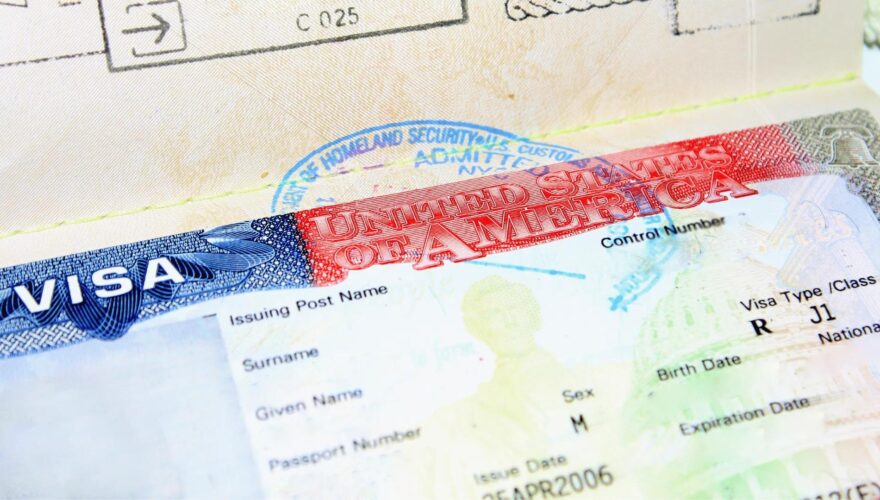
The J-1 visa lets a company bring a foreign intern or trainee into the United States without going through the H-1B or L-1 process.
It works differently from a standard work visa: the employer doesn’t file a petition directly with USCIS. A designated sponsor, authorized by the U.S. Department of State under the BridgeUSA program, handles the visa process and stays responsible for compliance throughout the placement.
Two very different situations fall under the same J-1 categories.
A U.S. company might recruit an external intern or trainee from the open market.
A multinational group might instead use the J-1 to place one of its own foreign employees at a U.S. subsidiary, as a faster, quota-free alternative to a work visa.
This guide covers both, but pays particular attention to the second case, since it’s the one most international mobility teams are actually managing.
-
The J-1 visa lets a company host a foreign intern or trainee in the US with no annual cap and no lottery, unlike the H-1B.
-
Intern applies to students or recent graduates (within 12 months of graduation); Trainee applies to professionals with at least one year of post-degree experience, or five years in the field.
-
Maximum duration is 12 months for an Intern and 18 months for a Trainee (12 months for hospitality).
-
Federal regulation (22 CFR § 62.22) explicitly bans using a J-1 placement as a substitute for ordinary employment or to displace an American worker.
-
The two-year home-country rule (INA 212(e)) can block a direct move to H-1B, L-1, or a Green Card after the program ends, a critical point to check before recruiting.
-
A 30-day grace period follows the end of the program, with no work authorization.
Why companies use the J-1 visa
For a company recruiting externally, the J-1 offers three concrete advantages over a standard work visa:
- a generally faster and more flexible process
- no annual cap or lottery
- and the chance to evaluate a promising profile on the U.S. market before considering a longer-term visa.
For an international group, the calculation is different. Placing an employee already on the payroll abroad into a U.S. subsidiary under a Trainee category avoids the H-1B lottery entirely and can move faster than an L-1 petition, provided the assignment genuinely qualifies as training rather than ordinary work.
This is the scenario an International Mobility Manager is usually solving for: not “how do we find talent,” but “how do we get this specific person into our U.S. entity without an 18-month visa queue.”
Intern or Trainee: which category applies?
The BridgeUSA program covers around fifteen exchange visitor categories, but companies rely almost exclusively on two of them.
| Category | Profile | Egibility | Maximum duration |
|---|---|---|---|
| Intern | Student, recent graduate | Graduated less than 12 months ago, or currently enrolled | 12 months |
| Trainee | Qualified professional | 1 year post-degree experience, or 5 years in the field | 18 months (12 in hospitality) |
The choice depends entirely on the candidate’s status at the time of application. A recent graduate is almost always an Intern; an experienced employee being sent on assignment is almost always a Trainee. Switching categories mid-program isn’t possible.
Recruiting an external intern from the U.S. job market and sending your own foreign employee to a U.S. subsidiary both use the same J-1 categories, but they carry different risk profiles.
An intragroup placement is easier to document as genuine training, since the employee’s existing role and reporting line already exist.
An external hire needs a training plan built from scratch to avoid looking like a disguised job opening.
The employer’s role: sponsor, DS-7002, and DS-2019
The employer never files directly with USCIS. It works through a designated sponsor, an organization authorized by the Department of State to administer J-1 training and internship programs. Two documents anchor the process.
The DS-7002 (Training/Internship Placement Plan) is drafted jointly by the host company and the sponsor. It sets out the participant’s daily duties, learning objectives, supervision arrangements, and how progress will be measured. This is the document U.S. authorities use to distinguish a genuine training program from a regular job.

Once the DS-7002 is validated, along with proof of financial support and health insurance, the sponsor issues the DS-2019 (Certificate of Eligibility), which confirms the program dates and allows the candidate to apply for the visa itself.
Budget planning should account for four separate cost lines:
- the sponsor’s fee (which varies by organization and service level),
- the SEVIS I-901 fee,
- the visa application (MRV) fee,
- the mandatory health insurance for the full duration of the stay.
Plan for 2 to 4 months between launching the file and the program’s start date, sponsor selection and consular appointment included.
-
Confirm whether the candidate is an intragroup transfer or an external hire, and document the case accordingly
-
Choose a designated sponsor and verify their DS-2019 turnaround time
-
Draft a DS-7002 training plan with real, verifiable supervision, not a job description in disguise
-
Check whether the candidate is subject to the two-year home-country rule (212(e))
-
Budget for sponsor fees, the SEVIS I-901 fee, visa fees, and mandatory health insurance
-
Start the file 2 to 4 months before the intended start date
What the J-1 program is not: the non-substitution rule
This is the part most vendor guides skip, because it works against them commercially. Federal regulation is explicit on what a J-1 placement cannot be. Under 22 CFR § 62.22, training and internship programs “must not be used as substitutes for ordinary employment or work purposes” and cannot, “under any circumstances,” be used to displace an American worker.
The same regulation puts the obligation on the sponsor directly: host organizations must not “displace full- or part-time or temporary or permanent American workers or serve to fill a labor need,” and the position must exist primarily to serve the participant’s training objectives, not the company’s staffing needs.
In practice, this means the role has to be built around what the participant is meant to learn, not around a vacancy the company needs filled. A compliance review that finds a trainee effectively doing a regular job, regardless of how the paperwork was completed, exposes both the host company and the sponsor to real risk.
Under 22 CFR § 62.22(g)(4), sponsors must conduct an on-site visit before placing a participant with any host organization that has fewer than 25 employees or less than $3 million in annual revenue, unless the host is an academic institution or a government office.
Smaller host entities should expect this step as part of onboarding, not as a red flag.
The two-year rule and what it means for retention
One of the most consequential parts of the J-1 program has nothing to do with the placement itself: it’s what happens afterward.
The Two-Year Home-Country Physical Presence Requirement (INA 212(e)) applies if any of three conditions is met:
- the program was funded, in whole or in part, by the U.S. government or the participant’s home government;
- the participant’s field appears on the home country’s Exchange Visitor Skills List;
- or the program involved graduate medical training.
If it applies, the participant cannot
- change status to H, L, or an immigrant visa
- obtain an H-1B, L-1, or immigrant visa from abroad,
until they’ve spent two cumulative years in their home country after the program ends.
A waiver can be requested from the Department of State in specific situations: no objection from the home government, exceptional hardship to a U.S. citizen spouse, or a medical or government interest case.
For a company planning to keep the talent long-term, this is a check to run before recruitment starts, not after the program is already underway.
How France Immigration supports your J-1 program
Our teams review each case before the sponsor is even selected: confirming whether the placement is an intragroup transfer or an external hire, checking exposure to the two-year rule, and flagging compliance risks in the training plan before they become a problem during a site visit or a later transition to a work visa.
A poorly scoped training plan or an unchecked two-year rule can derail a placement. Our experts handle over 650 international immigration cases every year.
Conclusion
The J-1 visa remains one of the fastest ways to bring a foreign intern, trainee, or transferring employee into the United States, without the H-1B’s cap or lottery. But a badly chosen sponsor, a training plan that looks like a job description, or a two-year rule discovered too late can turn a program you were counting on into a dead end for the talent you wanted to keep.
Frequently Asked Questions
The employer works through a Department of State-designated sponsor, provides a documented training plan (DS-7002), a dedicated on-site supervisor, and adequate resources. Federal regulation also requires that the position not substitute for ordinary employment or displace an American worker.
There’s no single fee. Costs include the sponsor’s fee, which varies by organization and service level, the SEVIS I-901 fee, the visa application (MRV) fee, and mandatory health insurance for the full duration of the stay.
Plan for 2 to 4 months between launching the file and the program’s start date, including sponsor selection and the consular appointment.
Intern applies to students or recent graduates within 12 months of graduation, for a maximum stay of 12 months. Trainee applies to professionals with at least one year of post-degree experience, or five years in the field, for up to 18 months.
Only if they aren’t subject to the two-year home-country rule (INA 212(e)). If it applies, a direct transition is blocked until two cumulative years have been spent in the home country, unless a waiver is granted.
Yes. This intragroup use case follows the same Intern or Trainee categories as external recruitment, and is often easier to document as genuine training, since the employee’s existing role and reporting structure already exist.


The mobility sector is constantly evolving: subscribe to our newsletter and stay up to date!
- Mandatory formalities to complete
- The administrations responsible for the procedures
- Required documents
- Immigration statuses